Possession in Horror: From Undertone and Ghostbusters to Marlena Evans, Why We Can't Look Away

Updated: May 7
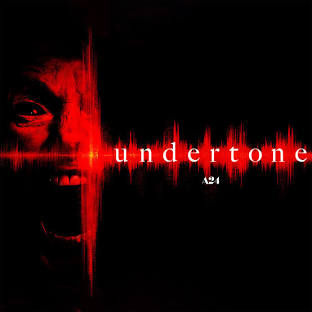
Of all the subgenres horror has to offer, possession might be the one that gets deepest under the skin. Not because of the gore, not because of the jump scares, but because of what it takes from us conceptually: the idea that your body, your voice, your face could be occupied by something that is not you. That the person you love could be gone, replaced, and you would have to look at what is wearing them.
On a recent episode of Fear & Wine, all four of us sat down to discuss Undertone, the 2025 A24 horror film that uses audio recordings as its possession vector, and the conversation spiraled outward, as the best horror conversations always do, into the wider pop culture history of possession stories. Here is our full breakdown.
Undertone (2025): possession as sound
Undertone, directed by Ian Tuason and distributed by A24, is one of the most formally inventive possession films in years. The premise is deceptively simple: Evy, a skeptic who co-hosts a paranormal podcast called The Undertone alongside her believer co-host Justin, receives a series of mysterious audio recordings sent by a stranger. The recordings document a couple, Jessa and Mike, experiencing increasingly disturbing paranormal activity in their home. Played in sequence over several nights, the recordings reveal Jessa singing children's nursery rhymes in her sleep, speaking what sounds like gibberish, and eventually uttering a phrase that, played backwards, translates as "come in, Abyzou."
Abyzou is a demon drawn from real Mediterranean and European folklore, one of the oldest documented demonic figures in Western mythology, believed to cause miscarriages and drive mothers to harm their own children out of jealousy, as she herself was infertile. The film is set against the backdrop of Evy caring for her dying mother and processing an unexpected pregnancy, which gives Abyzou's mythology a personal, visceral resonance that elevates the film well beyond a standard found-audio horror exercise.
What makes Undertone genuinely remarkable is its commitment to sound as its primary horror language. Evy and her dying mother are the only characters who appear on screen. All other characters exist only as voices, including Justin, Mike, and Jessa. The film's horror is constructed almost entirely through what you hear rather than what you see, and its Dolby Atmos sound design is extraordinary. Strange occurrences in Evy's house begin to mirror what she hears in the recordings, the Virgin Mary statuette keeps reappearing at her mother's bedside, faucets turn on alone, and the film builds to a climax that takes place entirely in darkness, with only Evy's screams and inhuman noises to carry it.
Critics compared it to Paranormal Activity, The Ring, and Hereditary, and those references are all fair, but Undertone earns its own identity. It won the Gold Audience Award for Canadian films at Fantasia before A24 acquired it for a seven-figure deal. It grossed $9 million theatrically, a remarkable number for a film made on a $500,000 budget. The podcast framing in particular felt personal to us given what we do with Fear & Wine, and that conversation about whether the things we listen to in the dark can follow us home was one of our favorites of the year.
Ghostbusters (1984): the possession you forgot was actually scary
Dana Barrett's possession by the demon Zuul in Ghostbusters is one of popular culture's most enduring possession sequences, and it is wildly underrated as a piece of horror craft. Sigourney Weaver's performance as Zuul wearing Dana is genuinely unsettling, all wrong angles and guttural voice and glowing amber eyes, and the scene where she levitates and claws at her bed while the Keymaster arrives is pure body horror delivered in the middle of a comedy blockbuster.
This is exactly what makes the possession so effective: audiences come in primed for laughs and supernatural comedy, and then the film suddenly delivers something that, if you are paying attention, is deeply disturbing. Dana Barrett doesn't just get possessed. She is erased. Zuul uses her body as a vessel without her consent, and the film treats that as cosmically serious even while the Ghostbusters are cracking jokes in the lobby below.
The comedy and the horror are not competing in Ghostbusters. They are working together. The humor lowers your guard just enough for the possession sequences to land harder than they would in a straightforward horror film. It is a tonal balance that almost no film has managed to replicate since.
The Shining (1980): when the building is the possessor
The possession in The Shining is unlike any other on this list because the possessor is not a demon or a ghost in any traditional sense. It is a place. The Overlook Hotel is the entity, a building that has absorbed decades of violence and cruelty and uses that accumulated psychic weight to find and exploit the cracks in the people who stay within its walls.
Jack Torrance does not arrive at the Overlook as a healthy man who is then corrupted. He arrives already fractured, already alcoholic, already carrying rage toward his family that he has barely contained. The hotel does not create that darkness. It amplifies it, accelerates it, and eventually takes the wheel entirely. His descent is a slow burn that Stephen King designed deliberately to show how the environment can become the instrument of a person's undoing.
One of our own hosts, Rachel, visited the Stanley Hotel in Estes Park, Colorado, the real-world location that inspired King's novel, and the eeriness of the place adds an entirely different dimension to watching the film. The Overlook is fictional, but the feeling that some places accumulate something, some residue of the suffering they have witnessed, is not.
Days of Our Lives: Marlena Evans and the soap opera possession that broke the genre
No discussion of possession in pop culture is complete without stopping at one of the most gloriously unhinged storylines in television history: the demonic possession of Marlena Evans on Days of Our Lives, which ran through 1994 and 1995 and captivated daytime audiences with a level of supernatural chaos that most prime-time horror shows would not attempt.
Marlena levitated. She crawled on walls. She manifested as a literal panther at one point. An emergency exorcism was performed by a priest who had previously left the clergy. The storyline aired on network daytime television and drew some of the highest ratings the show had seen in years. Kristin, one of our hosts, grew up watching this as appointment television, and honestly, looking back, the commitment to the bit is genuinely admirable.
What the Marlena possession understood instinctively is something that straight horror films sometimes miss: absurdity and horror are not opposites. The more committed a narrative is to its own internal logic, no matter how outrageous that logic gets, the more emotionally effective it becomes. Daytime viewers were invested in Marlena Evans as a character across decades of storytelling. When the show put her body in the hands of a demon, it was not a gimmick. It was the highest possible dramatic stakes the genre could offer.
Why possession keeps working
The through line connecting all of these stories, from Abyzou in an A24 sound experiment to a soap opera exorcism in 1994, is that possession horror always comes down to the same primal terror: loss of agency over yourself. Horror is most effective when it weaponizes something you cannot defend against, and you cannot defend against being replaced from the inside.
Possession narratives also function as unusually flexible metaphors. They can carry addiction, abuse, grief, religious trauma, mental illness, or the simple terror of watching someone you love become unreachable. The demon is whatever the story needs it to be. That flexibility is why the subgenre has never gone away and never will.
Listen to our Undertone episode
We covered Undertone in full on the podcast, with all four of us weighing in on the sound design, the Abyzou mythology, the A24 aesthetic, and whether a film that builds its horror entirely through audio can really deliver on a first watch versus a second. Come find us and let us know where you land on it.


Comments