Exploring the Chaos of French Horror

Updated: May 7

If Red Rooms is French horror at its most cerebral and restrained, MadS is French horror with the throttle pinned and no intention of letting you breathe. Directed by David Moreau and released on Shudder in October 2024, MadS is a 90-minute apocalyptic horror film shot in one continuous take. It earns a 94% on Rotten Tomatoes for exactly the reason the consensus describes: it immerses you in pure pandemonium and never once releases you from it.
This is Part 2 of our French Horror series here on the Fear & Wine blog. If you haven't read Part 1 on Red Rooms yet, start there, then come back. The two films couldn't be more different in approach, yet they belong to the same lineage. Filmmakers trust their craft and their audiences enough to do something genuinely unusual with the genre.
What is MadS About?
The setup is deceptively simple. Romain, a teenager, picks up drugs from a dealer on his way to a birthday party. He gives a ride to a mysterious injured woman he finds on the road. From that moment forward, the night unravels into something between a zombie outbreak and a drug-induced hallucination. The film is deliberately ambiguous about which one it actually is.
The structure follows three characters in succession: Romain, then his girlfriend Anaïs, and finally Julia, a woman Romain was supposed to meet at the party. As each character's segment ends, perspective shifts to the next. The world has degraded a little further each time. By the third act, the military has arrived, which tells you more than any character could about what is really happening and how large it has already grown.
Moreau conceived the film after a nightmare about being drugged and experiencing a bad trip. He was startled on a jog by an actor in zombie makeup filming an episode of The Walking Dead: Daryl Dixon near his home in Fontainebleau. He took this as a sign. The origin story is almost as unhinged as the film itself, and that energy is present in every frame.
The One-Take Technique and Why It Works Here
Single-take filmmaking is a high-risk proposition. When it fails, the audience spends the entire runtime distracted by the technique. They wait for hidden cuts, mentally scoring the director's athleticism instead of engaging with the story. When it works, it creates something no conventional film grammar can replicate: the feeling that there is no escape, no cut, no reset, and no relief.
In MadS, the technique works because it mirrors the film's subject matter with almost uncomfortable precision. A drug trip doesn't cut. A night that goes catastrophically wrong doesn't cut. There are no scene breaks where the characters can collect themselves. No ellipses where time has passed and things have settled. The camera follows each character in real time. You experience the night at exactly the same speed they do, and the dread accumulates accordingly.
Moreau and his crew filmed the entire thing five times before landing on the final take. Cinematographer Philip Lozano served as the sole camera operator throughout. The physical and logistical demands of that alone are staggering. Night scenes transition to dawn, vehicles, crowds, strobe lighting, and choreographed chaos—all in one unbroken movement. The Rotten Tomatoes consensus called Lozano the film's MVP, and it's hard to argue.
Sound Design as a Horror Weapon
One of the most discussed sequences in MadS is a scene where Romain, overwhelmed by the noise of the party, puts on a Halloween rubber head mask. The audio immediately muffles, as though the audience is now hearing through his covered ears. It is a small moment, but it is the kind of precise, considered filmmaking decision that separates a good horror film from a great one.
Throughout MadS, the sound design functions as a second layer of terror running beneath the visuals. The score by Nathaniel Méchaly is propulsive and deliberately disorienting. The audio choices consistently force the audience into the perspective of characters who cannot trust their own senses. When you cannot be sure whether what you are hearing is real or chemically induced, the normal horror toolkit of jump scares and sudden silences becomes something far more unnerving.
The Deeper Meaning of MadS
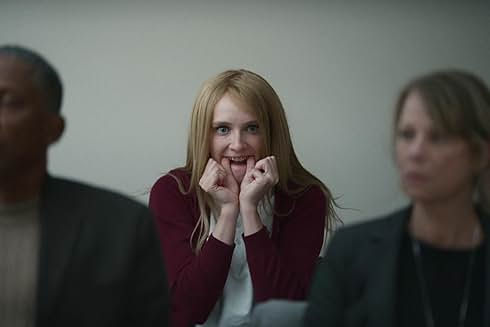
On the surface, MadS is a zombie outbreak film—fast, visceral, and unrelenting. But Moreau layers into it a critique that rewards a second watch. Romain is coded as privileged and careless. He treats risk as entertainment because he has never actually experienced consequences. The infected in MadS cycle between moments of complete sobriety and bouts of violent euphoria. This makes them far more unsettling than traditional mindless zombies. The film's commentary on hedonism, class, and the way the choices of the wealthy ripple outward onto everyone around them is considerably harder to ignore.
MadS could be read as a critique of wealth, a metaphor for the way addiction spreads through social networks, or simply an allegory for how quickly a single bad decision on a single night can destroy everything. The film is generous enough to support all three readings simultaneously, which is exactly what the best horror does.
We Covered MadS on Fear & Wine
We had a full conversation about MadS on the podcast. We discussed our reactions to the one-take format, the sound design, the ambiguity of the ending, and what the film is saying about drugs, perception, and the way horror uses altered states to get at truths that straight narrative can't reach. It is a great episode, and the wine was excellent.
Listen to our *MadS* episode on Spotify. If you missed it, go back and read Part 1 of our French Horror series on Red Rooms. Stay tuned because we have a lot more horror analysis coming. New episodes drop weekly, and there is always something in the glass.
The Intersection of Horror and Wine
As we delve deeper into the world of horror, it's fascinating to explore how wine can enhance the experience. Imagine sipping a rich, bold red while watching MadS. The flavors can mirror the film's intensity, creating a multi-sensory experience. Wine can elevate the tension, making every jump scare more pronounced.
Pairing wine with horror films is not just about taste; it's about creating an atmosphere. A light, crisp white might suit a more cerebral horror film, while a deep, dark red complements the chaos of MadS. The right wine can transform your viewing experience, making it more immersive and engaging.
Final Thoughts
MadS is not just a film; it's an experience. The one-take technique, sound design, and layered storytelling create a unique horror experience. It challenges viewers to confront their perceptions and the consequences of their choices. As horror fans, we thrive on these narratives that push boundaries and provoke thought.
So, pour yourself a glass of your favorite wine, settle in, and prepare for a night of horror that will leave you breathless. The world of MadS awaits, and trust me, you won't want to miss it.
Comments