White Bear: The Cruelest Mirror Black Mirror Ever Held Up to Us

We did a poll on Reddit, and people OVERWHELMINGLY wanted us to cover "White Bear."

Some horror episodes want to scare you. "White Bear" wants to indict you. It spends forty minutes convincing you that you are watching a victim, then pulls the floor out and shows you that you have been sitting in the audience the whole time, phone raised, waiting for the next scream. It is one of the meanest structural tricks Charlie Brooker ever pulled, and it works because it does not cheat. Everything you needed to see the twist coming was on screen. You just did not want to look.
Let's get forensic about it.
The Facts of the Case
"White Bear" is the second episode of Black Mirror's second series. It premiered on Channel 4 in the UK on February 18, 2013. Charlie Brooker wrote it, Carl Tibbetts directed it, and Jon Opstad scored it. It runs a tight forty-two minutes, which matters, because the whole thing is built like a trap that snaps shut exactly on time.

Lenora Crichlow plays the woman we follow. Michael Smiley plays Baxter. Tuppence Middleton plays Jem. Hold onto those two names. They are the ones smiling at you by the end.
The Setup You Think You Understand
A woman wakes up in a house she does not recognize, wrists bandaged, pill bottles spilled on the floor, head pounding. She has no memory of who she is. Every television screen shows the same strange symbol. She walks outside looking for help and finds a street full of people who will not speak to her. They just film her. Silently. Blank-faced. Phones up.
Then a masked man with a shotgun starts hunting her, and the onlookers keep filming that too. She meets a fellow "survivor" named Jem, who explains the rules of this new world: a signal broadcast through screens turned most of the population into passive voyeurs who only watch and record, while a smaller group of "hunters" turned sadistic and violent. Jem has a plan. There is a transmitter out at a place called White Bear. Destroy it, break the signal, maybe end the nightmare.
If you have ever watched a real crowd form a phone-wall around an accident instead of calling for help, this part of the episode does not feel like science fiction. It feels like a Tuesday.
So we run. We are terrorized. We are given a mission and a sliver of hope. This is the part where "White Bear" is training you to feel like the protagonist. That training is the whole point, and it is about to be used against you.
The Twist That Rearranges Everything
At the transmitter, hunters attack. The woman wrestles a shotgun away and fires at her attacker. Instead of a shell, the barrel sprays confetti.
A wall slides open. Behind it is a live studio audience, applauding. Jem is an actor. Baxter is an actor. The hunters are actors. The masked figures with the phones were paying customers. The woman is strapped into a chair on a stage, and Baxter, grinning, finally tells her who she is.
Her name is Victoria Skillane. The little girl in the photograph she has been carrying, the one she assumed was her daughter, is Jemima Sykes, a six-year-old who was abducted and murdered. Victoria's fiancé, Iain Rannoch, did the killing. Victoria filmed it on her phone and watched. After their arrest, Iain died by suicide in custody, which left the full weight of public rage to land on Victoria.
Her sentence is this place. The White Bear Justice Park, named for the stuffed white teddy bear Jemima owned, a toy that became the enduring symbol during the search for the missing girl. Every day, Victoria is paraded past a jeering crowd, tortured, and then strapped to that chair and shown her own footage of Jemima. Then her memory is wiped, painfully, and she wakes up the next morning knowing nothing, ready to be hunted again. Visitors buy tickets. They stand behind the barriers with their phones raised. They are the passive watchers. There was never a signal. There was only a business model.
The horror of "White Bear" is not that the world became cruel. It is that the cruelty was organized, scheduled, ticketed, and sold as justice.
Theme One: The Crowd With the Phones Is the Real Monster
Brooker builds the episode so that the most unsettling image is not the man with the shotgun. It is the silent people filming. The hunters at least have the decency to be openly monstrous. The watchers wear the faces of ordinary bystanders, and they do the one thing that guarantees the horror continues: they document it and refuse to intervene.
This is the episode's sharpest idea, and it lands harder every year. A camera in a crowd creates distance. It converts a moral emergency into content. The instant you are filming a suffering person, you have quietly decided you are an observer and not a participant, that this is happening to someone else and your job is to capture it. "White Bear" takes that everyday reflex and scales it up into a punishment industry.
The genius, and the cruelty, is that the paying visitors are not written as demons. They are written as normal people on a fun day out. That is the accusation. The episode suggests the capacity for this is not exotic. It is dormant in ordinary people and only needs the rules to change, the permission to be granted, for it to come out.
Theme Two: Justice or Appetite?
Here is where "White Bear" refuses to let anyone off easy, and where the analysis has to hold two things at once without flinching.
Victoria is guilty. She filmed a child's torture and murder and did nothing to stop it. The episode never asks you to forgive that or to pretend she is innocent. Critics who framed the park as a straightforward tragedy of a wronged woman are misreading it. She did a monstrous thing.
And the punishment is also monstrous. That is the trap Brooker sets. The Justice Park dresses itself in the language of accountability, but strip the branding away and what remains is a paid attraction where members of the public torture a helpless, memory-wiped woman for entertainment and call it righteousness. Reviewers reached for the same phrase from different angles: a society's fantasy of "real justice," an appetite for punishment, perverted justice. The park does not exist to protect anyone or to rehabilitate anyone. It exists because the crowd wants the feeling, and someone figured out how to charge admission for it.
The design of the punishment is the tell. It mirrors her crime with surgical precision. She recorded a victim's terror, so now she is recorded. She showed no mercy on camera, so now no one shows mercy to her, on camera. This "eye for an eye" symmetry feels satisfying for about three seconds, and then you notice what it makes of the people carrying it out. To punish her cruelty, they have to manufacture more cruelty, daily, forever, and teach an audience to enjoy it. The scales are not balanced. The cruelty just got a second location.
The uncomfortable truth the episode plants in your gut: the machinery of vengeance does not shrink the amount of horror in the world. It franchises it.
Theme Three: Can You Punish Someone Who Does Not Remember?
The memory wipe is not a gimmick. It is a philosophical grenade.
Every morning, the Victoria who wakes up has no knowledge of Jemima, of Iain, of the crime, of yesterday's torment. She is, functionally, a blank person experiencing pure terror for reasons she cannot access. So who is being punished? Not the woman who committed the crime, because that woman's memories are erased every night. What remains is only the suffering, detached from the guilt that was supposed to justify it.
This is where retribution eats itself. Punishment is supposed to connect a wrongdoer to their wrong. Wipe the memory and you sever exactly that connection. What is left is suffering for its own sake, aimed at a person who, in the moment, understands nothing except fear. The park claims to be delivering justice to a murderer. What it actually delivers, every single day, is raw terror to an amnesiac. Those are not the same act, and the gap between them is the whole horror.
Theme Four: The Audience Is Us
Brooker and Tibbetts made a deliberate technical choice that turns the knife. For the entire first act, before the reveal, the camera is handheld, intimate, jittery, locked to Victoria's point of view. You are inside her panic. You identify with her. Then, in the closing sequence, when we see the park reset for the next day's paying customers, the camera goes still and static, the detached gaze of an observer watching a spectacle.
The grammar of the filmmaking is doing the argument. First it makes you the victim. Then it makes you the watcher. And the sick joke is that you, the Black Mirror viewer, have been the watcher all along, comfortable on your couch, consuming a woman's engineered suffering for forty-two minutes of entertainment. The title says it plainly. A black mirror is a dead screen, and what you see reflected in it is your own face, watching.
The Craft Notes Worth Knowing
A few production details deepen the read. The twist was not in the original script. Brooker rewrote the whole thing in about two days during production, calling it a kind of fever dream, and it became the first major plot twist in a Black Mirror episode. He even considered making Victoria genuinely innocent before landing on the far crueler choice: guilty, but unaware of it.
Many critics connected the crime to the real Moors murders committed by Ian Brady and Myra Hindley in 1960s Britain, a case in which the killers recorded a victim. Brooker has said the emotional target of the episode is that specific queasy modern reflex where watching becomes a substitute for acting.
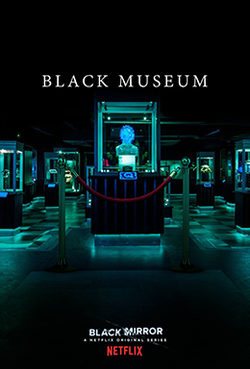
And if you follow Black Mirror's web of references, the White Bear Justice Park keeps resurfacing. The balaclava masks with the White Bear symbol appear as museum exhibits in "Black Museum." Victoria Skillane's name trends as hashtags in "Hated in the Nation," including a chilling "free the White Bear one." Her name even flickers past in "Smithereens" and "USS Callister." Brooker treats the park less like a one-off and more like a permanent institution humming away in the background of that world. Which is, when you sit with it, the bleakest implication of all. This is not a nightmare that ended. It is a going concern.
What It Says About Humanity
"White Bear" is not really about a signal, or a park, or even about Victoria. It is about the distance a screen creates between a human being and their own conscience.
The episode's argument, delivered without a single lecture, is that our cruelty rarely announces itself as cruelty. It arrives dressed as justice, as entertainment, as documentation, as just watching. Give people permission, remove the friction, add a small fee and a comfortable barrier to stand behind, and a startling number of ordinary humans will pay to watch another person suffer and feel virtuous doing it. Victoria filmed a child's murder and told herself she was only recording. The visitors film Victoria's torment and tell themselves they are serving justice. The episode places those two acts side by side and dares you to find the bright line between them.
The most honest thing "White Bear" does is refuse the comfortable exit. It will not let you feel superior to the crowd, because it spent the whole runtime turning you into the crowd. You wanted Victoria to escape, then you learned what she did, and for a moment part of you wanted her to suffer. That flicker, that little hunger for someone else's pain to balance a moral ledger, is the thing the episode is actually about. Brooker just built a whole amusement park to make you notice it in yourself.
The scariest monster in "White Bear" never wears a mask. It buys a ticket, raises a phone, and calls the whole thing fair.
Frequently Asked Questions
What is the White Bear symbol in Black Mirror?
Within the story, the symbol on every screen is presented as the mysterious "signal" that supposedly turned people into passive watchers. That explanation is a fabrication, part of the staged scenario. The name "White Bear" actually comes from the stuffed white teddy bear owned by Jemima Sykes, the murdered child, a toy that became the defining symbol during the public search for her.
Is Victoria Skillane guilty in White Bear?
Yes. Victoria filmed her fiancé Iain Rannoch abducting, torturing, and murdering six-year-old Jemima Sykes and did not intervene. The episode never presents her as innocent. Its moral weight comes from asking whether her guilt justifies the specific punishment she receives, not from doubting the guilt itself.
Why does Victoria's memory get wiped every day?
The memory wipe lets the White Bear Justice Park run the same punishment on a daily loop for paying visitors. Each morning Victoria wakes with no memory of the crime or of previous days, so she experiences fresh, total terror every time, mirroring the helplessness of her victim. It also raises the episode's central question: if she cannot remember what she did, who exactly is being punished?
What does White Bear say about society?
It argues that ordinary people are capable of organized cruelty when it is reframed as justice or entertainment, and that filming suffering rather than stopping it has become a default modern reflex. The passive crowd with raised phones is deliberately meant to resemble us.
Sources: episode details verified via IMDb, The Movie Database, and the episode's broadcast credits. Written for Fear and Wine.
You can listen to our full episode HERE on White Bear on Tuesday, July 7th
Comments