Something Lives in These Mountains
We are leaving for the mountains this weekend.

Three of us are heading to Franklin, North Carolina, tucked into the southwestern corner of the state, deep inside the Nantahala National Forest, where the gorge walls are so steep and the ridgelines so high that sunlight does not fully reach the valley floor until noon. The Cherokee had a name for that darkness. They named it deliberately. More on that shortly.
We are going to record an episode under the stars, in the woods, at a cabin, the way horror stories were always meant to be told. Around a fire. In the dark. In a place where the land itself has something to say.
And Franklin, North Carolina has a lot to say.
Why Franklin
Most people know Franklin as the Gem Capital of the World, a small mountain town where you can sluice for rubies and sapphires and go home with pockets full of something beautiful. That part is real and it is lovely.

But beneath that charm, and we mean beneath it literally, Franklin sits on one of the most myth-saturated pieces of land in North America. The Cherokee called this region the Great Blue Hills of God. They built sacred council mounds here, including the Nikwasi Mound that still sits in downtown Franklin alongside the Little Tennessee River, a mound the Cherokee said was occupied by immortal spirit warriors who lived inside the mountain and could be called upon in times of great need.
That mound has never been disturbed.
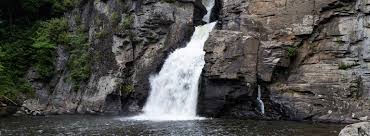
There is the Nantahala Gorge, whose name translates to Land of the Noonday Sun, named for the specific quality of darkness the gorge holds. There are mountains with names that translate to "where the man stood," named for a warrior turned to stone waiting for a monster to return. There are river pools with names that translate to "where the bones are." The Cherokee did not name things poetically. They named things accurately.
And then there are the stories that were passed down because people needed them to survive.
What We Found Up There
We went deep into the lore before we ever packed a bag, and what we found was a layered mythology unlike anything we have covered on Fear and Wine. This is not one tradition. This is multiple cultures, Cherokee, Scotch-Irish, African American mountain communities, all stacking their fear onto the same ancient mountains, and those mountains absorbing all of it.
For this episode, we are focusing on four stories from the Cherokee tradition specifically. Four beings. Four warnings. Four things that the people who knew these mountains best felt were important enough to pass down across generations, because forgetting them could get you killed.
We are not going to spoil all of it here. But we will tell you this much.
One of them is a shapeshifter. She wears the faces of the people you love. She sings while she walks through the woods so the children will come running toward the sound. She has been here longer than anyone can remember, and the place where she made her home has a Cherokee name that still marks it on the map.

One of them lives in the deep water. In the mountain pools with no visible bottom. In the river bends where the current goes quiet for no reason. It has a jewel on its forehead that pulses with a light so beautiful that to look at it directly is to lose the ability to look away. The Cherokee named the places where it lived. Some of those places are within a few miles of where we are sitting.
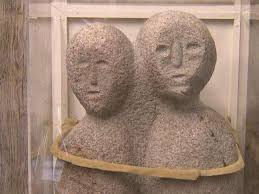
One of them is a people, not a monster. Small. Pale. Built for darkness. They were here before the Cherokee, and the Cherokee found their walls, heard their accounts, and recorded their existence with enough specificity that a botanist wrote about them in 1797, a governor documented a conversation about them in 1782, and a stone figure that may depict them was dug up in 1841 and sits in a museum case today. What happened to them is not fully known. Where they went is not fully known. The caves and hollows of these mountains have never been completely mapped.
And one of them is not a monster at all. They are the Immortal People, beings who have always lived inside these mountains, whose music you can sometimes hear rising from beneath the stone. They help the lost find their way home. They take in the broken and the grieving. They fought alongside Cherokee warriors when no one else would come.
But the time you spend with them does not match the time that passes in the world outside. And not everyone who follows the music comes back.
We Are Recording This in the Dark
This episode is going to sound different from our usual recordings. We are in the woods. We are around a fire. Each of us is reading one of these stories the way they were meant to be read, slowly, reverently, as something passed down rather than something performed.
Because that is what this lore deserves. These are not campfire tales someone invented for a thrill. These are warnings from a people who knew this landscape more intimately than anyone who has lived here since, and who understood that the mountains hold things that do not appear on any map.
We are sitting inside those mountains this weekend.
And we are very aware that we are guests here.
The Episode Is Coming
We will have the full episode for you soon, all four stories, read under the stars, exactly as they were meant to be heard. In the meantime, if you want to get deep into the world we are stepping into, James Mooney's Myths of the Cherokee, published in 1900 and compiled from years of living with the Eastern Band, is the primary source for much of what we are working with. It is available in full online and it will rearrange something in you.
We will see you on the other side of the mountains.
Subscribe so you do not miss the episode when it drops. And maybe pour something dark.
This one is going to be different.
Fear and Wine is a horror podcast and blog hosted by Kristin, Kelli, Leah, and Alisan. New episodes drop regularly wherever you listen to podcasts. Find us at fearandwine.com.


Comments